Looking for more ways to travel sustainably? You’ve come to the right place. Mystic, Connecticut, is a great starting point, with many eco-warriors leading the charge! In fact, this Earth Month, Whaler’s is putting a spotlight on some of the top things to do in Mystic for a sustainable stay.
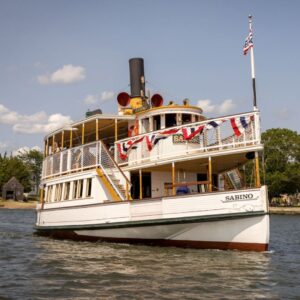
So, climb aboard as we cover Mystic Seaport Museum today. Their team is integral to bringing history to life, but that’s not all. They’re also taking steps toward a greener future! Let’s dive in and explore some of their sustainability initiatives behind the scenes.History Meets Sustainability: The Sabino
Shipyard with Smarts
The Museum’s Henry B. du Pont Preservation Shipyard isn’t your ordinary shipyard. It strategically implements sustainability practices to keep vessels in shipshape. A key feature of the Shipyard’s shiplift is a catchment basin that collects runoff and debris from work on the vessels hauled in the lift. This concrete basin channels the materials and liquids to holding tanks that can be subsequently pumped out to enable proper disposal. Additionally, the Shipyard provides sanitary pump-out facilities as part of Connecticut’s Clean Marina Program.Invisible Infrastructure, Visible Impact
The Thompson Exhibition Building and the surrounding McGraw Gallery Quadrangle were designed with a comprehensive stormwater collection and treatment system in mind. Runoff is collected in a drainage network that directs it to an underground detention basin. This basin allows a portion of the water to be recharged back into the ground. Permeable paving technology was also used, enabling water to percolate into the underlying soil for natural treatment.From Sails to Solar
Did you know? Two major solar arrays have also been installed to help supply electricity for the museum’s needs. One array sits on the 41,000-square-foot Collections Research Center roof, and the other is located on the 8,400-square-foot Marine Science Center.Reduce, Reuse, Recycle
In 2018, Mystic Seaport Museum launched a Single-Use Plastic Free initiative to reduce consumption of single-use plastics. Additionally, water bottle refill stations were installed throughout the grounds to encourage visitors to bring and utilize reusable water bottles, significantly reducing waste on museum grounds.Sustainable Things to Do in Mystic: Art with a Message
While visiting during your sustainable stay in Mystic, be sure to check out their wonderful rotating exhibits. There’s always something new to see! In fact, you’ll definitely have to come back more than once to experience it all. Take a look at some of their current exhibits below.Alexis Rockman: Oceanus
Alexis Rockman: Oceanus Alexis Rockman: Oceanus is a major exhibition featuring ten large-scale watercolors and an 8-by-24-foot panoramic painting, all commissioned by the Museum to raise awareness and inspire conversations around the critical global issues that face our oceans due to the impacts of maritime activities as part of our collective cultural, social, and economic heritage. Don’t wait to check out this exhibit—it closes on Sunday, April 28th!
Spineless: A Glass Menagerie of Blaschka Marine Invertebrates
Spineless explores the inspiring ways people have tried to record the ocean’s mesmerizing marine invertebrates. Even more surprisingly, many of these creatures have become introduced species worldwide, including right here in Mystic. The exhibit goes further by contextualizing these intricate invertebrate models through the work of Dr. James T. Carlton. Dr. Carlton is the Director Emeritus of the Williams College-Mystic Seaport Coastal and Ocean Studies Program and one of the world’s leading experts in marine bioinvasions.